

Category: Comparisons

AI Knowledge Hub

Explore our complete collection of articles, tutorials, and insights about AI tools and technology.

The most important AI decision you’ll make in 2026 isn’t which model is “smartest” — it’s which one fits your workflow. Claude, ChatGPT, and Gemini all clear the basic bar for writing, coding, and reasoning. But each has clear strengths, and the right choice depends entirely on what you actually do with it. Here’s the honest breakdown.

30-Second Verdict

  • Claude — pick if you write for a living, code in complex codebases, or need the most thoughtful long-form reasoning.
  • ChatGPT — pick if you want the best ecosystem: voice mode, image generation, custom GPTs, and the widest integrations.
  • Both, at the same time — if you can afford it. Many power users run Claude Pro and ChatGPT Plus in parallel and pick whichever fits the task.

Writing Quality

Winner: Claude. Claude 4.6 Opus produces noticeably more natural prose than ChatGPT. It’s better at holding tone and voice across a long article, avoids the “telltale AI phrases” that plague GPT output, and rarely resorts to filler. For blog posts, emails, and editorial work, most experienced writers rank Claude first.

ChatGPT still wins for short-form copy, ad hooks, and template-driven writing where you need something quick and polished.

Coding
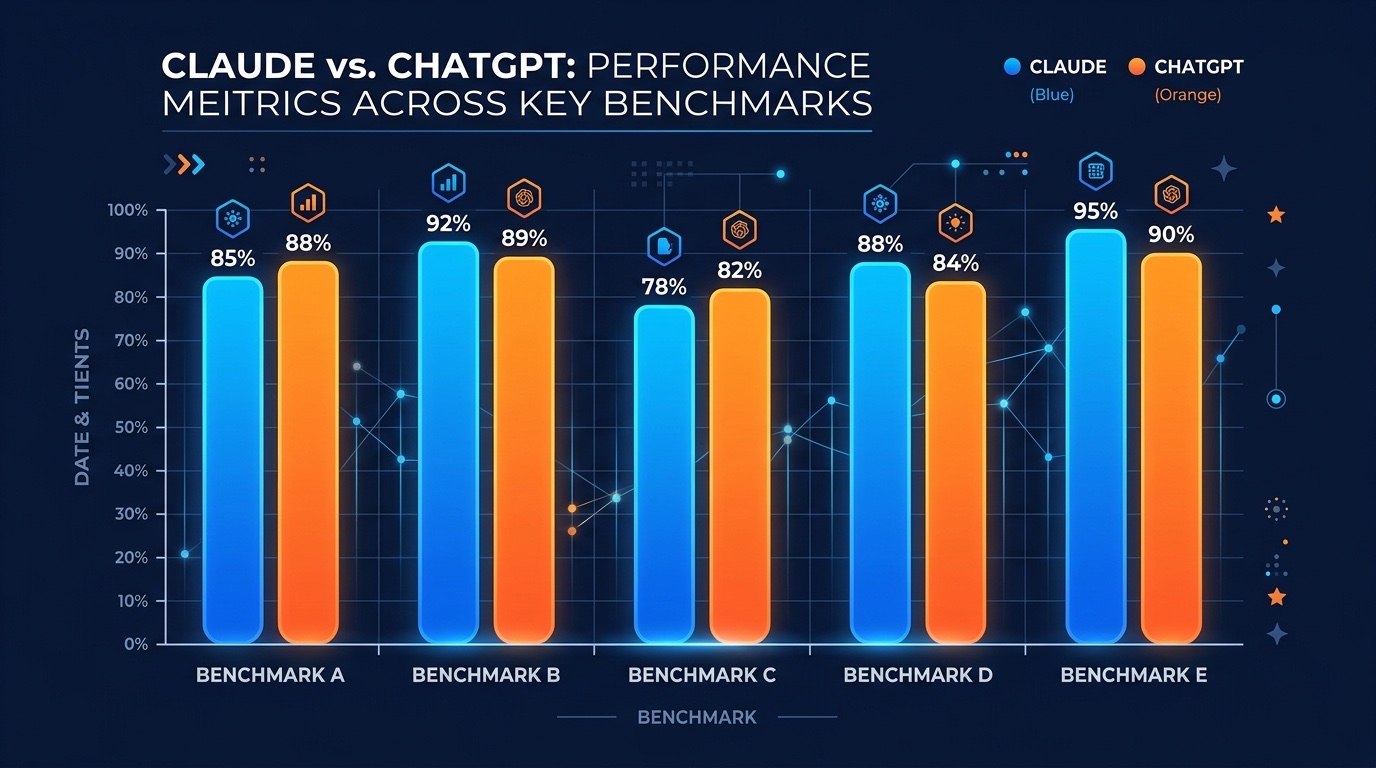
Claude vs ChatGPT benchmark comparison

Winner: Claude (by a small margin). Claude has led SWE-bench, HumanEval, and related benchmarks through most of 2025-2026, and it handles very large files and multi-file refactors better than GPT. The Claude Code CLI has become the default tool for serious software engineers.

ChatGPT’s Code Interpreter is still excellent for data analysis tasks, quick scripts, and anything that needs to run Python in-context. If you’re cleaning spreadsheets or generating charts from CSVs, GPT’s native code execution wins.

Reasoning & Research

Winner: Depends on the mode. ChatGPT’s o-series reasoning models outperform Claude on some hard math and science benchmarks. But for research tasks that involve reading long documents, synthesizing across multiple sources, and maintaining nuance, Claude’s extended thinking mode feels more careful and less prone to hallucination.

Context Window

Both now support very long contexts. Claude Opus 4.6 handles 200K tokens in standard mode and up to 1M with the extended context beta. GPT-4.5 and beyond offer comparable 128K-1M windows. For most users the real bottleneck isn’t the advertised max — it’s how well the model uses the context. Claude has historically been better at “needle in a haystack” retrieval inside long contexts.

Multimodal & Voice

AI chatbot interface

Winner: ChatGPT. This is ChatGPT’s biggest lead. Voice Mode is smooth and natural, DALL-E 3 image generation is built in, you can share your screen in conversations, and video input works. Claude’s multimodal is still text + image only — no voice, no image generation, no video.

Ecosystem & Integrations

Winner: ChatGPT. Custom GPTs let anyone package a purpose-built assistant. The GPT Store has thousands of specialized tools. ChatGPT also integrates with Microsoft 365, Google Workspace, and countless third-party apps through Actions and plugins.

Claude is catching up through the Agent SDK, MCP (Model Context Protocol), and first-party integrations like Claude for Gmail and Claude for Chrome. Power users who work in the terminal prefer Claude Code.

Pricing (2026)

TierClaudeChatGPT
FreeClaude free (rate limited)ChatGPT free (GPT-4o mini)
Pro ($20/mo)Claude Pro (Opus access)Plus (GPT-4.5 + tools)
Power user ($100+/mo)Claude Max ($100/mo)Pro ($200/mo — unlimited o-series)
Team/Enterprise$25/user Team$25/user Team, Enterprise custom

When to Use Which

  • You write blog posts, books, or marketing copy: Claude.
  • You code for a living: Claude (Claude Code CLI is the default).
  • You do data analysis or need Python execution: ChatGPT Plus.
  • You want voice conversations or image generation: ChatGPT Plus.
  • You need to read long PDFs, contracts, or research papers: Claude.
  • You already pay for Microsoft 365 or Google Workspace: ChatGPT has better integrations.
  • You want the most custom GPT ecosystem: ChatGPT (GPT Store).

FAQ

Is Claude better than ChatGPT?

For writing quality and complex coding, yes. For ecosystem, voice, and image generation, no. The two are close enough that most power users pay for both.

Which AI is free to use?

Both offer free tiers. ChatGPT’s free tier gives you access to GPT-4o mini with limits. Claude’s free tier gives you access to Claude Sonnet with daily message limits.

Can Claude generate images?

No. Claude does not generate images as of 2026. For image generation you need ChatGPT Plus (DALL-E 3), Midjourney, or Stable Diffusion.

Which is better for coding — Claude or ChatGPT?

Claude, by most benchmarks and developer surveys. The Claude Code CLI has become the default for professional developers, especially for large codebases and multi-file edits.

Related Reading

David Brown
Last updated: Apr 11, 2026
4 min read

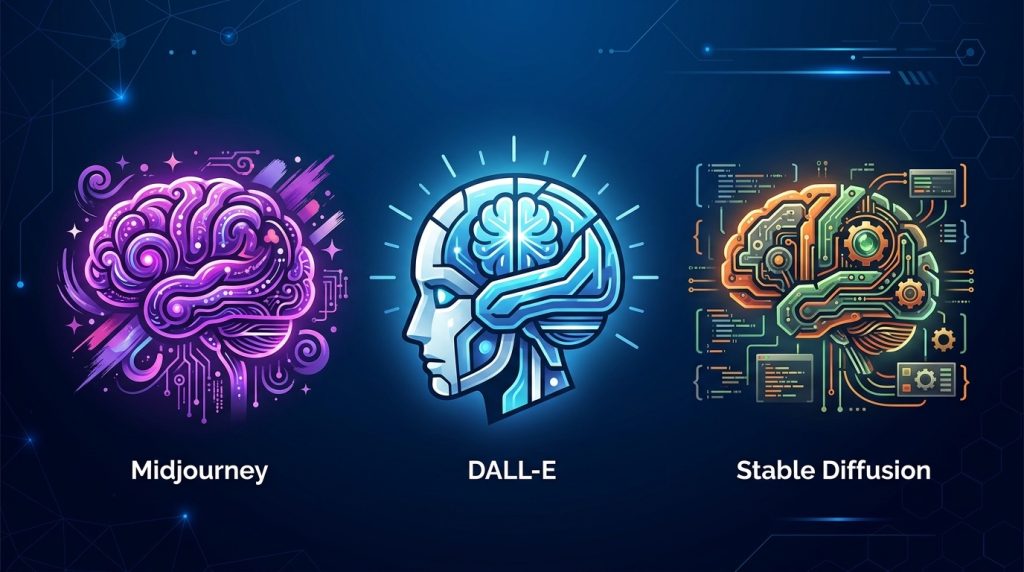
Three AI image generators dominate the market in 2026: Midjourney, DALL-E 3, and Stable Diffusion. They’re all powerful, but each one serves a completely different type of user. If you pick the wrong one, you’ll waste months fighting the tool. This guide breaks down exactly which one you should use based on what you’re actually trying to do.

The three leading AI image generators in 2026 each target a different creative audience.

Quick Verdict: Which One Should You Pick?

  • Midjourney — pick if you want the best-looking images with minimal effort. Best for marketers, designers, and artists.
  • DALL-E 3 — pick if you need accurate text rendering, fast iteration, and integration with ChatGPT. Best for content creators and casual users.
  • Stable Diffusion — pick if you want total control, free local generation, and custom models. Best for developers and tinkerers.

Midjourney: The Artist’s Choice

Midjourney artistic style sample

Midjourney v7 produces what most people consider the most visually stunning AI images available. Out of the box, its outputs look like professional concept art — rich colors, cinematic lighting, painterly details. You don’t need to be a prompt engineer to get great results.

Pricing: $10/mo (Basic) to $120/mo (Mega). All plans include commercial usage rights.

Strengths: Unmatched aesthetic quality, consistent style, strong community on Discord and web app.

Weaknesses: Poor text rendering, limited fine control, no free tier anymore, can feel “samey” across prompts.

DALL-E 3: The Integrated Workhorse

DALL-E 3 clean minimalist style

DALL-E 3 is built into ChatGPT Plus ($20/mo), which means you can iterate on images while chatting. It’s also the only major model that reliably renders text inside images — a huge deal for posters, memes, and UI mockups. Microsoft Designer and Bing Image Creator both run on DALL-E 3 and offer limited free usage.

Pricing: Free via Bing Image Creator, $20/mo via ChatGPT Plus.

Strengths: Best text rendering, natural language prompting, ChatGPT integration, prompt rewriting for better results.

Weaknesses: Less artistic variety than Midjourney, strict content filter, limited aspect ratios.

Stable Diffusion: The Power User’s Dream

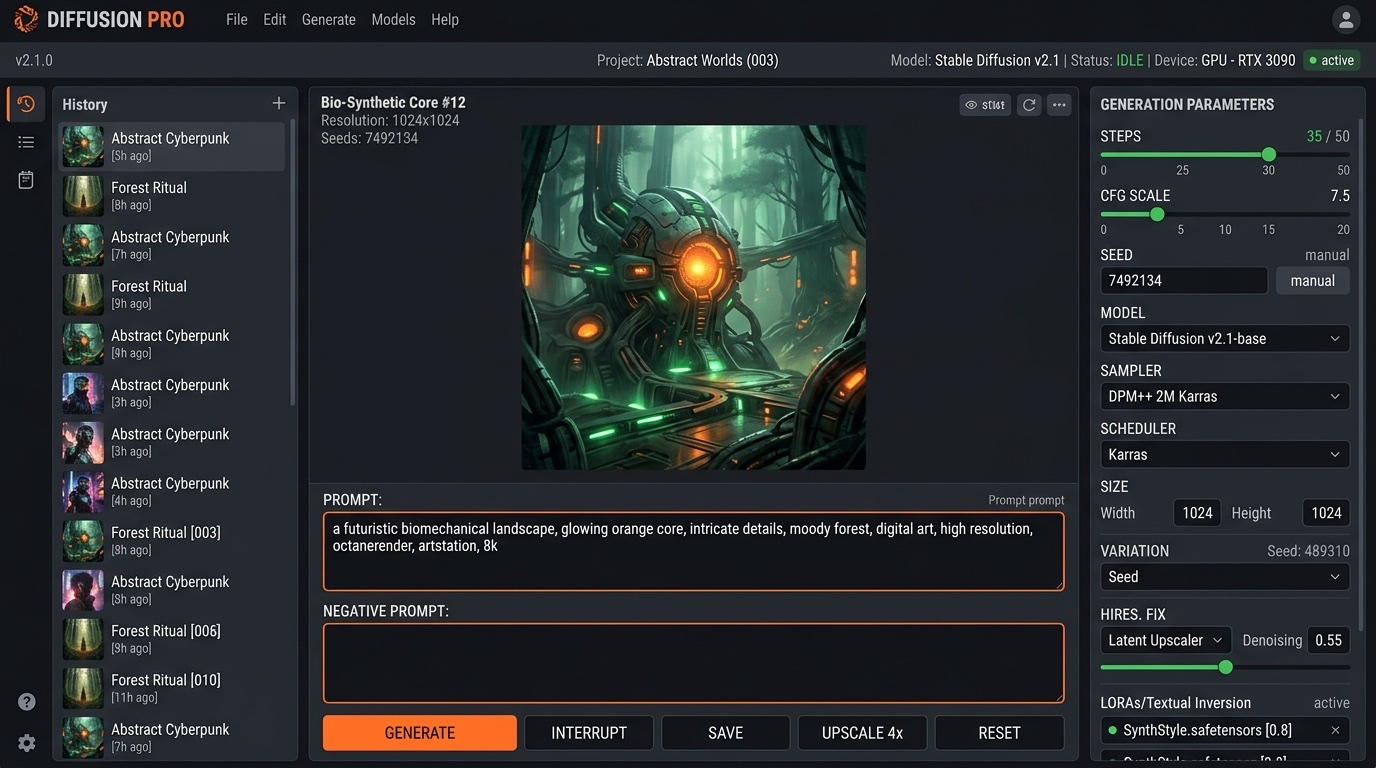
Stable Diffusion interface with controls

Stable Diffusion is open source, which changes everything. You can run it locally on your own GPU, download thousands of fine-tuned community models, and control every parameter. The learning curve is steep, but no other platform offers this level of flexibility.

Pricing: Free (local) or $9/mo+ via hosted services like DreamStudio.

Strengths: Total control, free self-hosting, massive model ecosystem (Civitai, HuggingFace), ControlNet, LoRAs, inpainting, ComfyUI workflows.

Weaknesses: Steep learning curve, requires a decent GPU for local use, inconsistent quality without careful prompt work.

Head-to-Head Comparison

FeatureMidjourneyDALL-E 3Stable Diffusion
Image Quality9.5/108/108.5/10 (with right model)
Ease of Use8/1010/105/10
Text in ImagesPoorExcellentGood (with SDXL/Flux)
CustomizationLimitedLimitedUnlimited
Free TierNoneYes (Bing)Yes (self-host)
Commercial UseYes ($10+)YesYes
Starting Price$10/moFree / $20/moFree

Which Should You Use?

Content creators and marketers: Start with DALL-E 3 via ChatGPT Plus — the fastest workflow for blog images, social posts, and thumbnails.

Designers and artists: Midjourney. Nothing else matches its out-of-the-box aesthetic for concept art, storyboards, and high-end visuals.

Developers and power users: Stable Diffusion via ComfyUI. You get full control, can train your own models, and pay nothing after hardware.

Beginners who just want to play: Start free with Bing Image Creator (DALL-E 3) or DreamStudio.

FAQ

Which AI image generator has the best quality?

For pure aesthetic quality, Midjourney v7 leads. For photorealism and text accuracy, DALL-E 3 is often better. Stable Diffusion with the right fine-tuned model (like Flux or SDXL) can match both.

Can I use AI images commercially?

All three allow commercial use if you’re on a paid plan. Midjourney requires at least the $10 Basic plan. DALL-E 3 and Stable Diffusion allow commercial use across all tiers. Always check the license for the specific model you use.

Do these tools work on mobile?

Midjourney has a web app that works on mobile browsers. DALL-E 3 works through the ChatGPT mobile app. Stable Diffusion requires either a hosted service or a desktop computer.

Which is best for beginners?

DALL-E 3 via Bing Image Creator — it’s free, requires no setup, and you type plain English prompts. No Discord, no parameters, no GPUs.

Related Reading

David Brown
Last updated: Apr 11, 2026
4 min read

ChatGPT and Gemini are the two dominant AI assistants in 2026. Both have evolved significantly, but they serve different strengths. Here’s a direct comparison to help you choose the right one.

Overview

ChatGPT, built by OpenAI, runs on GPT-4o and o3 models. Gemini, built by Google, runs on Gemini 2.5 Pro and Flash. Both offer free tiers and premium plans, but their capabilities diverge in important ways.

Language and Writing Quality

ChatGPT produces more polished, natural-sounding text. It handles nuance, tone control, and creative writing better than Gemini. For blog posts, marketing copy, and long-form content, ChatGPT has a clear edge.

Gemini is competent but tends toward more formulaic responses. It sometimes over-explains or adds unnecessary caveats.

Research and Factual Accuracy

Gemini has a significant advantage here. Its deep integration with Google Search means it can pull real-time information and cite sources directly. ChatGPT’s browsing feature works but feels bolted on rather than native.

For research-heavy tasks – fact-checking, market analysis, academic work – Gemini is the stronger choice.

Coding and Technical Tasks

Both handle coding well, but ChatGPT’s code interpreter and canvas features give it an edge for iterative development. Gemini integrates with Google Colab and handles data analysis tasks smoothly within the Google ecosystem.

Multimodal Capabilities

Gemini natively processes images, audio, and video within its context window. ChatGPT handles images and has voice mode, but Gemini’s multimodal integration feels more seamless – especially for analyzing documents, screenshots, and video content.

Pricing

Feature ChatGPT Gemini
Free tier GPT-4o (limited) Gemini 2.5 Flash
Pro plan $20/month (Plus) $19.99/month (Advanced)
Context window 128K tokens 1M tokens
Best for Writing, coding Research, multimodal

The Verdict

Choose ChatGPT if you prioritize writing quality, creative tasks, and coding assistance. Choose Gemini if you need real-time research, multimodal analysis, or work heavily within Google’s ecosystem. Many power users keep both.

FAQ

Is ChatGPT or Gemini more accurate?

Gemini edges ahead for factual queries thanks to native Google Search integration. ChatGPT is more reliable for reasoning and nuanced analysis.

Can I use both ChatGPT and Gemini for free?

Yes. Both offer free tiers with access to their base models. Premium plans unlock advanced models and higher usage limits.

Which is better for students?

Gemini is better for research and sourcing. ChatGPT is better for writing essays and explaining concepts. Use both depending on the task.

Related Reading

More to Read

David Brown
Last updated: Apr 11, 2026
3 min read