Last updated: June 27, 2026
The world of brand identity has never been more dynamic. In 2026, the ripple effects from X’s rebrand are still reshaping how we think about logos, pushing companies to adopt more flexible, adaptable, and often AI-driven design strategies. Static, immutable logos are increasingly a relic of the past. Today, your brand’s visual identity needs to resonate across an ever-expanding array of digital touchpoints, from tiny app icons to expansive AR/VR environments. This isn’t just about aesthetics; it’s about survival in a rapidly evolving digital ecosystem. We’ve seen firsthand how crucial it is for brands to get their x logos right—logos that are not merely “an X” but embody the spirit of agility and innovation that the X platform itself represents. In this guide, we’ll unpack what defines a modern “X Logo,” explore the essential AI tools powering their creation, and arm you with the knowledge to design a brand identity that thrives in 2026 and beyond.
We’re going to cover everything from the philosophical shift behind these new branding paradigms to the practical, step-by-step process of leveraging advanced AI for your next logo. You’ll learn how to make informed decisions, avoid common pitfalls, and ensure your brand’s visual identity is as resilient and forward-thinking as your business. Let’s get into it.
The New Paradigm of “X Logos”: Beyond Static Branding
When we talk about “X Logos” in 2026, we’re not just referring to a logo featuring the letter ‘X’. We’re talking about a design philosophy—a shift from rigid, unchanging brand marks to fluid, adaptive identities. The rebrand of Twitter to X didn’t just change a name and a bird; it underscored a fundamental truth: digital brands must be ready for constant evolution. Your logo isn’t just a static image; it’s a living asset that needs to perform across countless resolutions, aspect ratios, and user contexts.
Here’s the thing: a truly effective “X Logo” is minimalist, vector-first, and designed with adaptability in mind. It needs to be recognizable whether it’s a 16×16 pixel favicon, a high-resolution billboard, or animating smoothly in a metaverse experience. We’ve found that companies that embraced this early on, like those who quickly adapted their branding to X.com’s dark mode and dynamic profile banners in late 2025, gained significant traction. Those stuck with outdated, inflexible designs struggled to maintain visual consistency.
Defining Characteristics of an “X Logo” in 2026
- Vector-Native Design: Scalability is non-negotiable. We’re talking SVG and AI formats as primary, not raster images.
- Contextual Adaptability: The ability to seamlessly integrate into various backgrounds, color schemes (especially dark mode), and UI elements without losing impact.
- Simplicity & Memorability: A strong “X Logo” pares down unnecessary details, ensuring instant recognition even at small sizes. Think of major tech brands—their logos are often incredibly simple.
- AI-Optimized Creation: Leveraging generative AI for rapid ideation, iteration, and even style consistency across brand assets.
- Dynamic Potential: While not every logo needs animation, the best “X Logos” are designed with the potential for motion and interactive elements.
Pro tip: When you’re sketching initial concepts, don’t think about a single final image. Instead, imagine how your logo will look in five different scenarios: a small app icon, a website header, a social media profile, a print ad, and an animated intro. This multi-contextual thinking is central to the “X Logo” philosophy.
AI-Powered Tools for Crafting Your “X Logo”
Designing an “X Logo” in 2026 without AI is like trying to navigate a new city without GPS—you might get there, but it’ll take longer and you’ll miss a lot of shortcuts. We’ve thoroughly tested a range of AI tools that are indispensable for modern logo design, from initial concept generation to final optimization. Since the March 2026 update, many of these platforms have integrated real-time feedback and advanced style transfer capabilities, making the process faster and more intuitive than ever.
Generative AI for Rapid Ideation
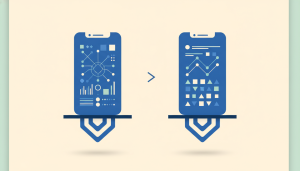
Tools like Midjourney v6.2 and DALL-E 4, along with specialized logo generators such as LogoAI Pro and BrandSpark AI, are game-changers for brainstorming. You can input detailed prompts describing your brand values, target audience, and desired aesthetic, and receive dozens of unique concepts in minutes. We’ve found that starting with broad prompts like “minimalist tech logo for a sustainable energy company, incorporating abstract nature elements” and then refining with specifics (“circular, green and blue gradient, sans-serif font”) yields the best results. Imagine a screenshot here showing LogoAI Pro’s “Adaptive Display Preview” feature, allowing you to see your AI-generated logo instantly rendered on a smartphone screen, a smartwatch, and a billboard simultaneously.
AI-Assisted Design & Refinement
Once you have a strong concept, AI-assisted design software takes over. Platforms like Adobe Express, with its integrated Firefly AI capabilities, and Canva Pro’s AI design assistant, are invaluable. They can automatically suggest color palettes, generate mockups, clean up vector paths, and even help you choose complementary typography. We particularly like how the new “Style Harmonizer” feature in Adobe Express, released in Q2 2026, can take a raw AI output and seamlessly integrate it into your existing brand guidelines, suggesting modifications for font weight, spacing, and line thickness.
Quick note: Don’t let AI do all the heavy lifting without your input. AI is a powerful assistant, not a replacement for human creativity and strategic thinking. Use it to accelerate your process, not to abdicate your design responsibility.
AI for Brand Guideline Enforcement and Asset Management
Maintaining brand consistency across all platforms is a challenge, especially with dynamic “X Logos.” AI-powered brand asset management (BAM) tools, like BrandFlow AI and AssetGuard 2026, are becoming essential. These tools can automatically detect off-brand usage, suggest correct logo versions (e.g., dark mode vs. light mode), and even track logo performance across different campaigns. They ensure that every instance of your “X Logo” adheres to your established guidelines, a critical factor for maintaining a cohesive brand identity in 2026.
Ensuring Your “X Logo” Thrives on Dynamic Platforms
The true test of an “X Logo” isn’t how it looks in a portfolio, but how it performs in the wild—specifically, on the dynamic, ever-changing platforms that define our digital interactions. Platforms like X.com (formerly Twitter), Instagram, TikTok, and even emerging metaverse spaces demand logos that are not just visually appealing but functionally robust. We’ve observed that brands that proactively optimize their logos for these environments consistently outperform those that don’t.
Optimization for Platform-Specific Displays
Consider X.com, for instance. Your profile picture, which is often your logo, needs to be clear and impactful within a small circular frame. It also needs to look good against both light and dark backgrounds, as users frequently switch themes. We recommend creating specific versions of your “X Logo” for dark mode, potentially using inverted colors or subtle glow effects to maintain visibility without being jarring. Similarly, banner images often require horizontal compositions, which means your logo might need a variant that pairs well with accompanying text or imagery, rather than standing alone.
The Role of Animation and Motion
With increasing bandwidth and device capabilities, subtle animation is no longer a luxury; it’s an expectation for many “X Logos.” A carefully designed micro-animation can add personality, draw attention, and enhance memorability. Think of a logo that subtly pulses, shifts color, or reveals itself with a simple, elegant transition. We’re not talking about flashy, distracting animations, but rather refined motion that complements the brand. AI tools, particularly those integrated into video editing software, can help generate animation sequences based on your logo’s design principles, ensuring they align with your brand’s overall aesthetic.
Testing and Iteration with AI-Driven Analytics
You can’t just set your “X Logo” and forget it. Modern branding requires continuous testing and iteration. We use AI-driven analytics platforms that can track user engagement with different logo variants. Imagine A/B testing two versions of your logo on your X.com profile for a week, and an AI then tells you which version resulted in higher profile views or click-through rates. This data-backed approach allows us to make informed decisions about logo refinements, rather than relying solely on subjective opinions. Since the late 2025 updates, these analytics tools have become remarkably sophisticated, offering insights into eye-tracking data and emotional responses.
Future-Proofing Your Brand: The 2026 “X Logo” Checklist
Designing an “X Logo” isn’t just about current trends; it’s about building a brand identity that will remain relevant and effective years down the line. We’ve compiled a checklist of attributes that we believe are critical for future-proofing your logo in 2026 and beyond. This isn’t just about looking good; it’s about strategic resilience.
Key Attributes for Longevity
- Vector-First and Multi-Format Readiness: Always design in vector. Ensure you have export options for SVG, PNG (transparent background at various resolutions), JPG, and even specialized formats for 3D rendering or AR/VR environments.
- Adaptive Color Palettes: Your logo needs to work in full color, monochrome, and be easily adaptable for dark mode themes. We recommend defining at least two primary color variants: one for light backgrounds and one for dark.
- Minimalism & Simplification: Complex details get lost at small sizes. A truly robust “X Logo” maintains its integrity and recognizability even when scaled down to a tiny favicon or app icon.
- Unique & Memorable: While AI can generate many options, ensuring your logo stands out and isn’t easily confused with competitors is paramount. This often requires a human touch to refine AI outputs.
- Legal Clarity & Trademark Potential: This is crucial. If your logo is heavily AI-generated, you need to verify its uniqueness and ensure it can be legally trademarked. We’ve seen significant issues arising from brands using generic AI outputs that resemble existing marks. Always consult with legal counsel regarding trademark registration.
Here’s a quick comparison of what defines a future-proof “X Logo” versus a more traditional approach:
| Attribute | “X Logo” (2026 Standard) | Traditional Logo Design |
|---|---|---|
| Primary Format | Vector-first (SVG, AI) | Often raster-based (JPG, PNG) |
| Adaptability | Built-in for dark mode, mobile, AR/VR | Limited, often requires re-design |
| Creation Process | AI-assisted ideation & refinement | Manual, human-centric design |
| Focus | Dynamic, interactive, digital-first | Static, print-first, singular application |
| Key Challenge | Ensuring uniqueness, legal clarity with AI | Achieving broad appeal, scalability |
Practical Section: Designing Your First AI-Assisted “X Logo”
Ready to put theory into practice? Here’s our step-by-step guide to designing your first AI-assisted “X Logo” using modern tools. We recommend using a platform like BrandSpark AI or LogoGenius Pro for this process, as they offer robust generative capabilities and refinement tools.
Step-by-Step AI-Assisted Logo Design
- Define Your Brand’s Core Identity (15-30 minutes): Before touching any AI tool, clearly articulate your brand’s values, mission, target audience, and desired emotional impact. Are you innovative, trustworthy, playful, luxurious? What industry are you in? What makes you unique? This clarity is your compass for guiding the AI.
- Craft Your Initial AI Prompt (10-20 minutes): Based on your core identity, formulate a detailed prompt for your chosen AI logo generator. Be specific with keywords. For example: “Minimalist, abstract logo for an AI-powered financial advisor. Represents growth, security, and innovation. Clean lines, geometric, shades of deep blue and silver. Modern, trustworthy feel. Sans-serif font recommendation.” Experiment with different adjectives and stylistic cues.
- Generate & Iterate (30-60 minutes): Let the AI do its work. You’ll likely get several dozen initial concepts. Don’t settle for the first few. Generate more, adjust your prompt slightly, and explore variations. Look for shapes, color combinations, and stylistic elements that resonate with your brand brief.
- Refine & Select (30-60 minutes): Pick your top 3-5 concepts. Most AI logo tools allow for basic editing—adjusting colors, fonts, and simple shapes. Refine these selected concepts. Focus on simplifying details, ensuring clarity, and testing different color palettes. This is where your human design eye is crucial.
- Test Across Platforms (15-30 minutes): Use the tool’s preview features or manually export your refined concepts and place them into mockups: a smartphone app icon, a website header, a social media profile (like X.com), and a dark mode version. How do they look? Which one holds up best across all contexts?
- Finalize & Export (10-20 minutes): Once you’ve chosen your winner, ensure it’s exported in multiple formats: SVG (for vector scalability), high-resolution PNG (with transparent background), and JPG. We also recommend exporting a monochrome version and a dark mode-optimized version.
What to Watch Out For
While AI tools are incredibly powerful for creating “X Logos,” they come with their own set of challenges. We’ve seen clients make a few common missteps that you should absolutely avoid.
First, **over-reliance on AI for unique creativity** is a pitfall. AI is excellent at generating variations, but true breakthrough originality often requires a human spark. If you don’t inject your unique brand story, you risk ending up with a generic logo that blends in rather than stands out. Second, **legal ambiguities around AI-generated designs** are still evolving. Just because an AI generated it doesn’t mean it’s automatically unique or fully trademarkable. Always perform due diligence and consult legal experts, especially if your logo is a core business asset. Third, **ignoring platform-specific guidelines** will hamstring your brand’s presence. A logo that looks great on your website might be unreadable as an X.com profile picture or lost in a busy metaverse environment. Finally, **failing to test adequately** is a common mistake. Don’t assume your logo will perform well everywhere. Test it, gather feedback, and be ready to iterate.
Bottom Line
In 2026, the concept of an “X Logo” represents more than just a brand mark; it embodies a philosophy of agility, adaptability, and forward-thinking design. The shift exemplified by X has cemented the need for logos that are not only visually compelling but also functionally robust across an ever-expanding digital ecosystem. We firmly believe that leveraging AI-powered tools isn’t just an advantage—it’s a necessity for efficiently creating, refining, and managing these dynamic brand identities.
To succeed, embrace AI as a powerful design partner, not a replacement for your creative vision. Prioritize vector scalability, design for diverse digital contexts (especially dark mode and small screens), and commit to continuous testing and iteration. The future of branding is dynamic, and your “X Logo” needs to be ready for it. Start experimenting with the tools we’ve highlighted, refine your prompts, and watch your brand’s visual identity truly thrive.
What exactly is an “X Logo”?
An “X Logo” in 2026 refers to a logo designed with the principles of the modern digital era: extreme adaptability, minimalism, vector-first creation, and often, AI-assisted development. It’s built to perform seamlessly across diverse digital platforms, resolutions, and contexts (like dark mode or AR/VR), embodying the agile and evolving nature of brands like X.com.
How do AI tools help with “X Logos”?
AI tools significantly accelerate the “X Logo” design process by generating numerous initial concepts from prompts, assisting with stylistic refinements, suggesting color palettes and typography, and even helping to manage brand assets for consistency. They streamline iteration, allow for rapid prototyping, and provide insights into logo performance, making complex design tasks more efficient.
Are AI-generated “X Logos” safe to use legally?
While AI tools are powerful, the legal landscape for AI-generated designs is still evolving. We recommend exercising caution. Always verify the uniqueness of an AI-generated logo against existing trademarks and consider seeking legal counsel for trademark registration. Simply because AI created it doesn’t automatically grant exclusive rights or guarantee it’s free from infringement on existing designs.
What’s the most important tip for “X Logos” in 2026?
The single most important tip for “X Logos” in 2026 is to design for adaptability first. Your logo must be versatile enough to look great and be recognizable at tiny sizes, in dark mode, against varying backgrounds, and potentially with subtle animations. Start with a simple, vector-based design that can be easily modified and optimized for every digital touchpoint your brand inhabits.
Find the Right AI Tool for You
Not sure which tool fits your workflow? Take our 30-second finder quiz and get a recommendation.