How to Detect AI-Generated Text (And Why It's Hard)
Can you tell if text was written by AI? Learn the tell-tale signs, how detectors use perplexity and burstiness, and why AI detection is unreliable.
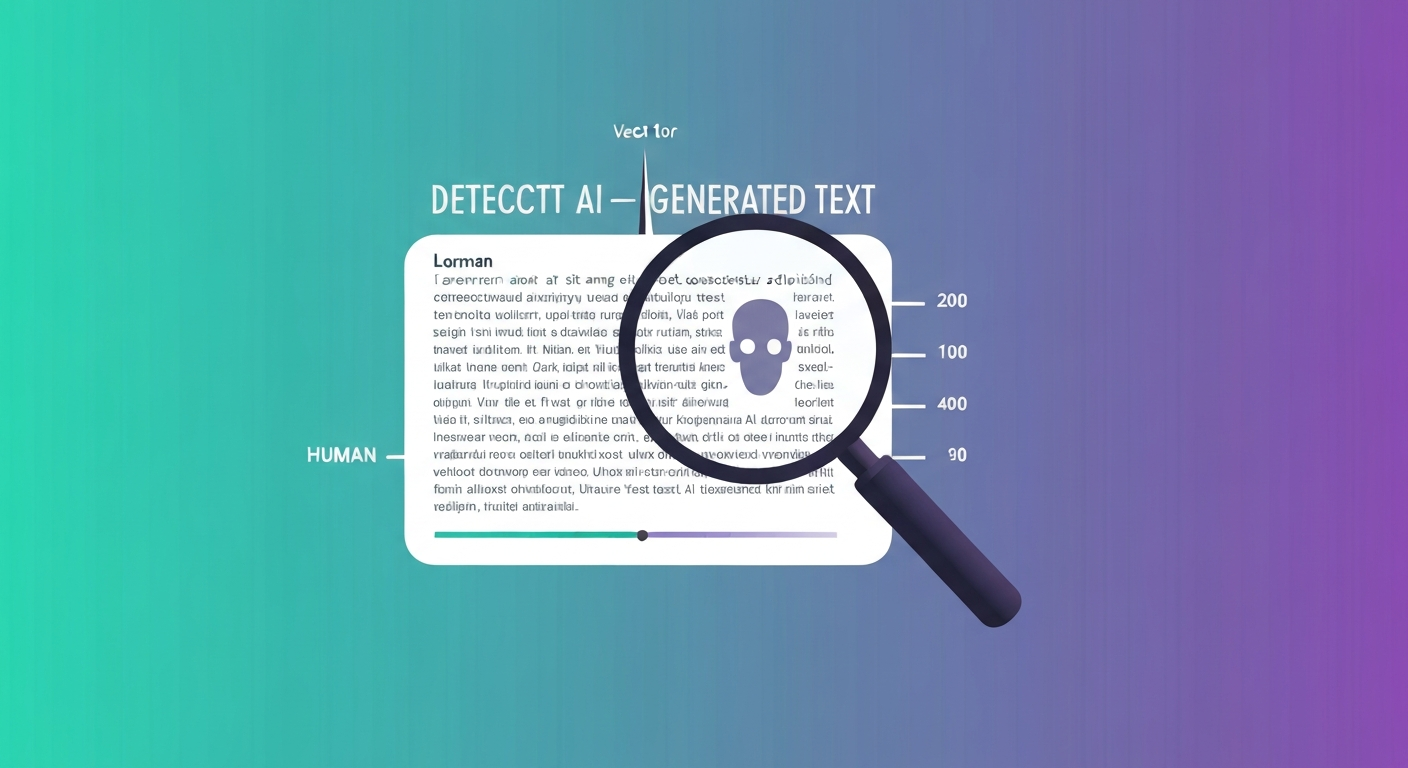
As AI-generated writing floods the internet, a natural question follows: can you tell when text was written by a machine rather than a person? Teachers, editors, and everyday readers increasingly want to know. The honest answer is that detecting AI text is possible but far from foolproof — and understanding both the signals and the limits is essential before you trust any “AI detector.” Here is what actually works.
Why people want to detect AI text
The motivations are practical. Educators worry about students submitting AI-written essays. Publishers and search engines want to maintain quality and authenticity. Recruiters, editors, and readers simply want to know whether they are engaging with genuine human thought or machine output. As tools like ChatGPT, Gemini, and Claude produce ever more fluent writing, the demand to identify it has grown sharply.
The tell-tale signs of AI writing
While no single clue is proof, AI-generated text often shares recognisable characteristics:
- Bland, generic phrasing: it tends toward safe, middle-of-the-road wording and avoids strong, specific opinions.
- Repetitive structure: uniform sentence lengths and a predictable rhythm, without the natural variation of human writing.
- Overuse of certain phrases: connective crutches like “it is important to note” and “in conclusion” appear frequently.
- Lack of genuine specifics: vague claims, few concrete personal details, and occasionally invented “facts” (hallucinations).
- Perfect but soulless grammar: flawless mechanics combined with a curious absence of personality or lived experience.
Reading for these traits is often more revealing than any tool — but they are hints, not verdicts.
How AI detection tools work
Automated detectors analyse text using two core concepts. Perplexity measures how predictable the wording is — AI text tends to be low-perplexity because models choose statistically likely words, whereas humans are more surprising. Burstiness measures variation in sentence structure — humans write in bursts of long and short sentences, while AI is often more uniform. Detectors look for text that is unusually smooth and predictable and flag it as likely machine-written. Some newer approaches also look for statistical “watermarks” that AI companies can embed in their models' output.
The big problem: detectors are unreliable
Here is the crucial caveat. AI detection tools are notoriously inaccurate, producing both false positives and false negatives. They regularly flag genuine human writing as AI — a serious problem when a student's original essay is wrongly accused — and they can be fooled by AI text that has been lightly edited or paraphrased. Non-native English writers are disproportionately flagged, because their more measured phrasing resembles AI patterns. For these reasons, several major tools have been quietly withdrawn or come with strong disclaimers, and no reputable detector claims certainty.
Why detection keeps getting harder
The challenge is only growing. As AI models improve, their output becomes more varied and human-like, eroding the very signals detectors rely on. Meanwhile, simple countermeasures — asking the AI to write less formally, or making a few human edits — can defeat detectors easily. It is an arms race the detectors are largely losing, which is why relying on them alone is risky.
A smarter approach
Rather than trusting a detector's percentage, combine methods and use judgement. Read critically for the tell-tale signs above, look for genuine specificity and personal voice that AI struggles to fake, and consider context — does the writing match what you know of the author? In education, process-based evidence (drafts, version history, and conversations about the work) is far more reliable than any detection score. Treat detector output as one weak signal among several, never as proof.
The bottom line
You can often spot AI-generated text by its bland phrasing, uniform structure, and absence of genuine specifics, and detection tools use perplexity and burstiness to estimate the likelihood — but those tools are unreliable, producing false accusations and missing edited AI text. As models improve, detection only gets harder. The wisest approach is to combine careful human reading with contextual evidence, and never to treat any AI-detection score as definitive proof.
Explore the AI tools behind the text
Understanding AI writing starts with knowing the tools. Explore our guides to AI writing and detection tools.