AI vs Machine Learning: What's the Difference?
AI and machine learning aren't the same thing. Machine learning is a subset of AI — here's the difference, the nested hierarchy, and where each is used.
People use “artificial intelligence” and “machine learning” as if they mean the same thing — and in casual conversation, nobody minds. But they are not identical, and understanding the difference clarifies a huge amount about how modern technology actually works. In one sentence: machine learning is a subset of artificial intelligence. All machine learning is AI, but not all AI is machine learning. This guide unpacks what that means.
What artificial intelligence is
Artificial intelligence is the broad field of building machines that can perform tasks we would normally consider to require human intelligence — reasoning, understanding language, recognising images, making decisions, solving problems. It is the umbrella term, the big goal. AI is not a single technique but an entire discipline, and it includes many approaches, of which machine learning is just one.
Importantly, AI does not have to “learn.” Some AI systems are built on hand-written rules — long lists of if-this-then-that instructions crafted by human experts. A chess program from decades ago, or a thermostat that follows programmed logic, can be AI without ever learning anything from data.
What machine learning is
Machine learning is a specific approach to achieving AI: instead of programming explicit rules, you let the system learn patterns from data. You feed a machine-learning model many examples, and it figures out the relationships itself, improving its performance as it sees more data. The defining idea is that the machine is not told exactly how to solve the problem — it learns the solution from examples.
A classic illustration is spam filtering. A rules-based approach would require an engineer to write out every rule for what makes an email spam. A machine-learning approach instead shows the system thousands of emails labelled “spam” or “not spam,” and it learns the patterns on its own — then keeps improving as new examples arrive.
The relationship: nested circles
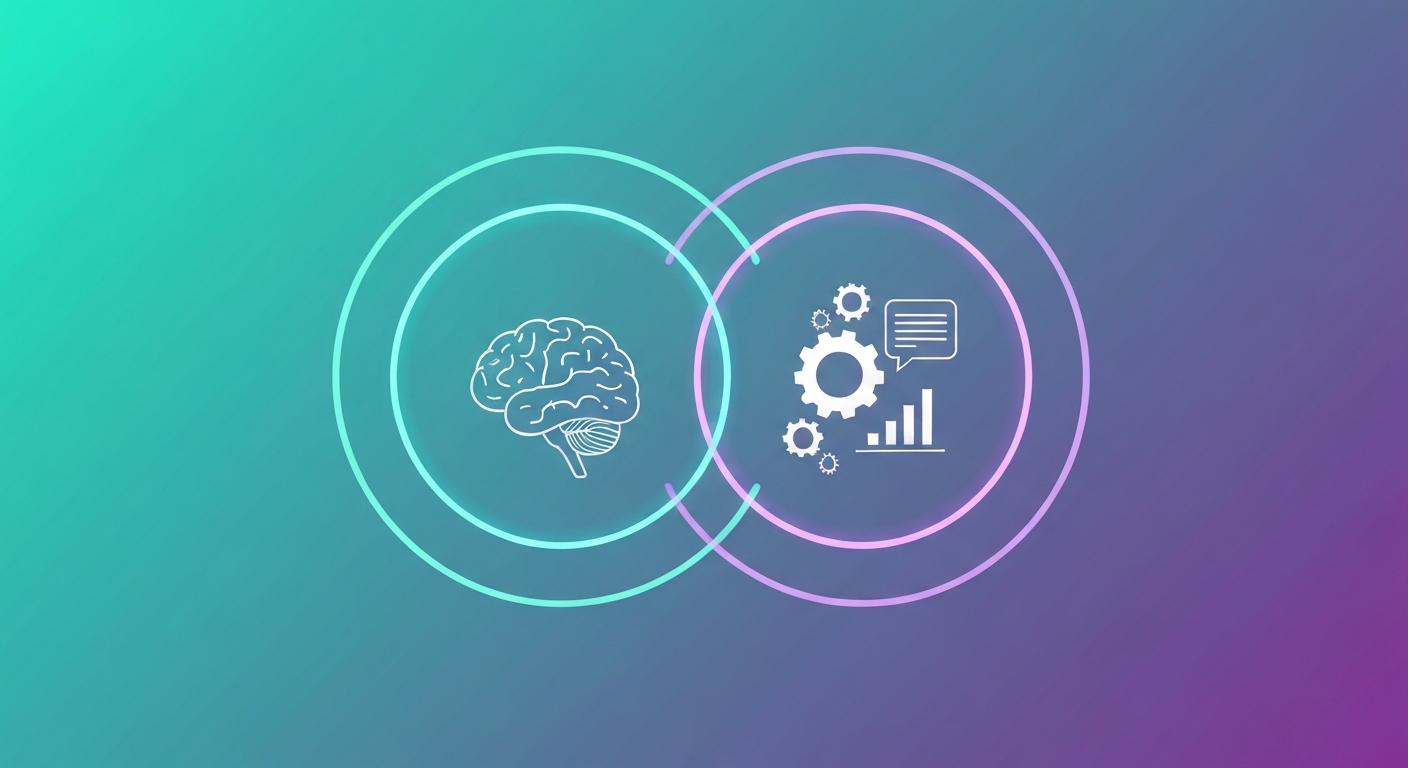
The cleanest way to picture it is as a set of nested circles. Artificial intelligence is the biggest circle. Inside it sits machine learning. And inside machine learning sits a further subset called deep learning, which uses multi-layered neural networks and powers much of today's cutting-edge AI — image recognition, speech, and the large language models behind modern chatbots. So the hierarchy runs: AI → machine learning → deep learning, each a more specialised subset of the one before.
Rules vs learning: the key contrast
The heart of the distinction is how the system gets its intelligence:
- Traditional (rules-based) AI: humans write explicit instructions. It is predictable and transparent, but brittle — it can only handle situations its programmers anticipated.
- Machine learning: the system infers its own rules from data. It handles messy, real-world complexity far better and improves over time, but it needs lots of data and can be harder to interpret.
This is why machine learning has come to dominate: for problems like recognising faces or translating languages, writing explicit rules by hand is essentially impossible, while learning from examples works remarkably well.
Where each shines
Neither approach is universally better; they suit different jobs. Rules-based AI is ideal where logic is clear and stable and where transparency matters — tax calculations, simple automation, safety-critical systems with well-defined rules. Machine learning excels where patterns are complex, data is plentiful, and rules are hard to articulate — recommendation engines, fraud detection, medical imaging, voice assistants, and generative AI. Many real systems combine both.
Why the distinction matters
Getting this right helps you cut through hype. When a product is described as “AI-powered,” it is worth asking whether it actually learns from data or simply follows clever rules — both are legitimate, but they behave very differently. It also explains why modern AI needs so much data and computing power: the machine-learning and deep-learning techniques driving recent breakthroughs are hungry for examples in a way that old rules-based systems never were.
The bottom line
Artificial intelligence is the broad goal of making machines act intelligently; machine learning is the specific, now-dominant approach of achieving it by learning patterns from data rather than following hand-written rules; and deep learning is a powerful subset of machine learning. Picture them as nested circles — AI containing machine learning containing deep learning. Keep that hierarchy in mind, and the buzzwords stop being confusing and start making sense.
Put AI to work with the right tools
Whether it learns from data or follows rules, AI is only useful when paired with the right software. Explore our guides to AI tools across every category.